1.5 Pre-anesthetic Patient Assessment, ASA guidelines and its significance
Okay, so the first part of our topic is Pre-anesthetic patient assessment; but even before this, we should first know why are we even doing this? What are the goals.
We can remember these by checking the patient's CRP levels before anesthesia. Just kidding CRP is an abbreviation for the following three major goals:
- We are trying to Choose if this surgery is even required or it can be prevented. This is the C in CRP.
- We are trying to Reduce the possible Risks related to this surgery. This is the R in CRP. An example can be performing a heart surgery before an elective surgery as the patient is more likely to survive that way.
- The last goal is to Plan for the surgery beforehand. If a central line is required, what anesthetic and for how long etc etc. This is the P in CRP.
Now, let us move on to the Pre-anesthetic assessment itself. This is as easy as ABC. No, literally. The ABCDE approach can also be applied here.
A: Airway
We are checking for one important feature and that is the Mallampati score. It defines how easy it is to intubate the patient. It goes like this in levels:
- if the entire softpalate, the complete uvula and the pillars can be seen.
- if the pillars cannot be seen.
- if the apex or tip of the uvula cannot also be seen.
- if nothing is visible.
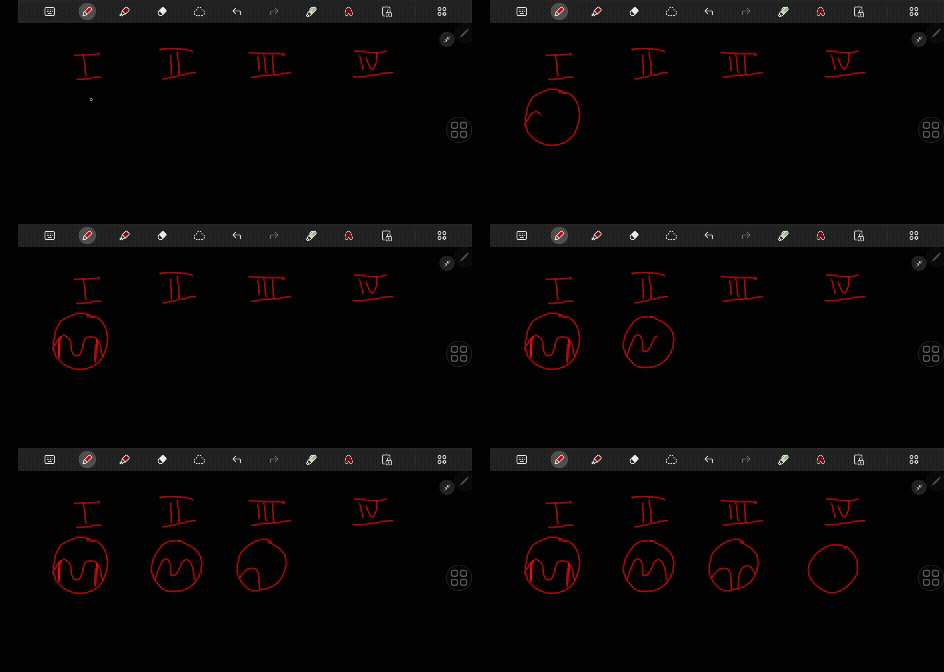
B: Breathing
It is essential to check the lungs by ascultation for wheezing, crackles etc.
C: Cardiac
Ascultation of the heart and seeing if we hear abnormal sounds. Like aortic regurgitation or stenosis etc?
The last part is ordering tests, for example if a patient previously had anemia, it is a good idea to ask for a Complete Blood Picture test.