1.3 Frank Starling Law, Cardiac Output and its determinants
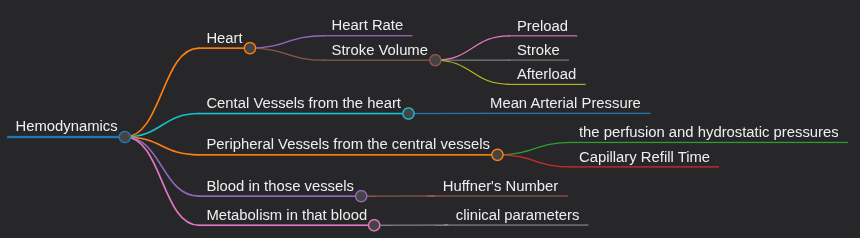
Okay, so this topic is relatively easy. Frank-Starling's Law states that the heart can regulate its own stroke volume and cardiac output, just by the preload.
Done!
Just kidding. 😄 Lets define what each of these words means.
Stroke volume is the blood sent to the body during each stroke or each heart beat. Its volume is around 80 ml.
Cardiac Output is a little tricky. It is the blood pumped to the body each minute. It depends on how much blood the heart pumps in each beat and how many beats are there in one minute. So essentially Heart rate multiplied Stroke volume.
Now, we know what heart rate is and how it can be influenced. If we are doing some physical exercise, or we are stressed, fight or flight response, chronotropic drugs etc can all increase the heart rate.
Stoke Volume itself depends on the preload. Preload is defined as the volume of blood inside the ventricle just before they contract. This is also known as the End-Diastolic Volume (EDV). (P.S. View the post link at the end to understand how preload is also EDV). If we want to express Stroke Volume mathematically, we can write
Stroke Volume = End Diastolic Volume - End Systolic Volume; Essentially the volume of blood before the contraction - the volume of blood remaining in the heart after contraction.
Now we reach the climax of the story: preload increases the stroke volume. But How?
Its kind of simple actually. When there is more blood in the ventricles, they are stretched more. This causes the actin and myosin filaments to be pulled into an optimal overlap state which is why they can generate more force and send more blood to the body. Another point to keep in mind is that this stretch also increases the sensitivity of Troponin C to Calcium. Meaning that for the same Calcium released in the heart, the fibers respond more and contract more. Simple.
For a more comprehensive explanation of hemodynamics, view the following post.
 Muhammad Saqib Hussain